
InfectID™-BSI

A bloodstream infection (BSI) and sepsis pathogen identification blood test that requires no pre-culture.
Direct testing from whole blood: <0.5 mL required

Targeted Pathogen Identification for Early Sepsis Management
InfectID™-BSI: Improving Standard of Care

“Small 0.5mL EDTA tubes” vs “Large blood culture bottles”
InfectID™-BSI: Improving Bloodstream Infection and Sepsis Treatment

Less than 3 hours laboratory time to actionable results
By delivering clinically relevant information in less than 3 hours, InfectID™-BSI empowers clinicians to initiate targeted antimicrobial therapies promptly, improving patient outcomes.

Identifies the top 20 bacterial and 6 yeast pathogens

Direct from whole blood

qPCR molecular detection

Uses the melt curve feature of qPCR

Minimally invasive sampling
Ideal for difficult-to-bleed patients (validated using blood samples of <0.5mL)
Key Benefits for Clinicians and Healthcare providers.
Addressing the Limitations of Current Methods
Enables Early Targeted Therapy
Supports Antimicrobial Stewardship
Enhanced Pathogen Detection
Broad Clinical Application
Streamlined Workflow Integration
InfectID™-BSI’s rapid approach integrates seamlessly into existing laboratory workflows. Its compatibility with the QIAGEN® Rotor-Gene® Q platform and user-friendly software ensures that results are consistent, repeatable, and easily interpreted, providing actionable insights in time-sensitive situations.
Product Details
InfectID™-BSI Bacterial and Yeast Combined Detection Assay Kit for qPCR
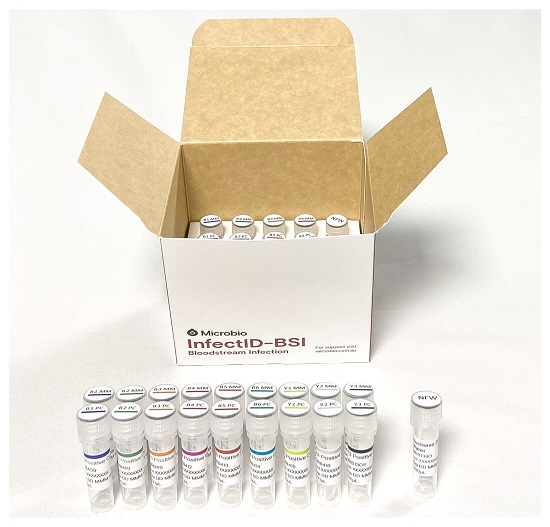
Product number: MRB1300
Microbio’s Bloodstream Infection (BSI) qPCR kit (InfectID™-BSI) consists of in vitro nucleic acid amplification tests for the qualitative detection of sepsis-associated bacteria and yeast DNA directly from whole blood samples using qPCR.
Includes analysis and reporting software for consistent, repeatable results.
Microbio’s InfectID™-BSI assay is for professional use only. Results from Microbio’s InfectID™-BSI qPCR kit should be interpreted in conjunction with other clinical and laboratory findings.
The assay is validated to run on QIAGEN®’s Rotor-Gene® Q qPCR instrument.
Related resources


